There is no signing, no injury, no ruling here. A thread asking fans about meeting NBA players resurfaces on r/nba every year or two, and it fills up fast — the 2020 and 2021 versions of the question both drew long comment chains, and the current one is running the same pattern. What makes it worth a look is not any individual story but the shape of the pile: a rough, crowdsourced map of where professional athletes and the public actually collide, and how both sides handle it when there is no press officer in the room.
Chick-fil-A, GameStop, a Toronto departure gate
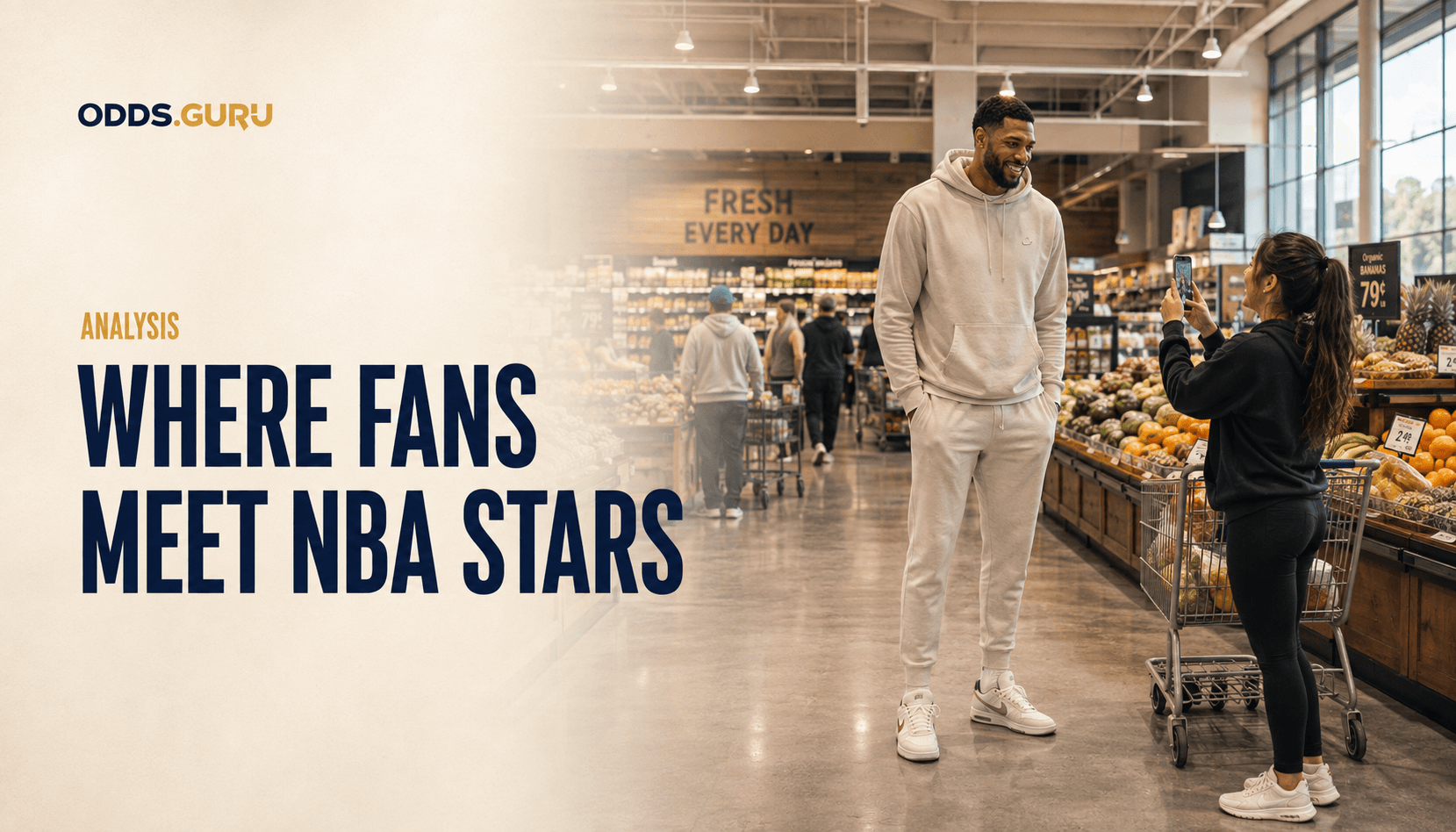
The settings are the tell. Almost none of these encounters happen at a basketball game.
One poster described seeing Dwight Howard seven to ten times a year at a Chick-fil-A before game days during his Orlando run, and remembered him taking pictures with anyone who asked. Another recalled Kevin Garnett walking alone into a GameStop during his Boston years, spotting a Celtics shirt, and ending up in a fifteen-minute conversation about video games while his family waited outside in the car.
The list of venues runs long and mundane:
- Steven Adams at a Whole Foods during his rookie season, and separately at a Target, where the fan's main memory was the size of the handshake.
- Scottie Pippen at a Ralphs supermarket in West Hills, California, reportedly clearing out the butcher counter for a family party — in a suit and tie.
- Carmelo Anthony at a Duane Reade in New York during his Knicks tenure.
- Charles Barkley checking into an Oklahoma City hotel, and, in a separate story from a different era, in a cinema restroom.
- Allen Iverson at a TGI Fridays on City Line Avenue after a Sixers game.
- Danny Green in Toronto airport ahead of a Finals road game, per a poster who offered a two-word good-luck message and has been claiming credit ever since.
The unwritten etiquette of meeting NBA players
Read enough of these and a rule emerges, and it is not subtle: the fans who got the best interactions are the ones who asked for the least.
The GameStop story is the cleanest version. The poster made eye contact, said one sentence about the previous night's game, and went back to browsing — and the player initiated the conversation a minute later. Compare that with the accounts where somebody chased a player through a concourse mid-exit. Tracy McGrady, jogging out of a spring training venue in Florida, gave one such fan an autograph and a blunt line about needing to leave. The fan rated it ten out of ten anyway.
The negative memories cluster in the same category: interruptions at moments when the player was doing something else. Patrick Ewing ignoring a held door at a gas station. Dikembe Mutombo waving off an eight-year-old's autograph request at Atlanta airport. Maurice Lucas telling a primary-school kid, flatly, that he did not sign — a story the poster now says he understands as an adult, having presumably done the arithmetic on how many times a week that request lands.
One of the more useful contributions came from someone who spent more than 20 years working in luxury hotels and reported handling many players over that stretch. The summary: mostly pleasant, often at a slight remove, and largely mediated by an entourage. That is a longitudinal read from a professional vantage point rather than a one-off, and it lines up with the thread's centre of gravity — a workforce that is polite in public and economical with its time.
Not every story is about temperament. A cashier in the 1990s, per her son, asked Chris Gatling for identification when he tried to buy alcohol; he pointed out he played for the Warriors, and she — not a sports viewer — told him that meant nothing to her. The recognition economy has holes in it.
Eight anecdotes, zero verification
Here is where the enthusiasm needs a brake. Every one of these is an uncorroborated memory, most of them a decade or more old, told by an anonymous account with no way to check the date, the venue, or whether the player in question was even in that city.
The distribution is also self-selecting. A story where a superstar was gracious is socially rewarding to tell; a story where nothing happened does not get typed out. Several posters admitted their encounter amounted to a nod, a look, or a shared restroom. One said outright that after years around arenas he had only ever had items signed through a locker-room corridor and still did not know what a real conversation would be like.
Treat the thread as sentiment data, not reporting. It tells you what fans believe about player accessibility and what they consider acceptable behaviour on both sides. It does not tell you that any specific player is nice.
The formal channels look nothing like this
The contrast with the league's own machinery is stark. In-arena conduct is codified: the NBA Fan Code of Conduct requires that players and fans respect each other, bans abusive language and harassment directed at game participants — including betting-related harassment — and threatens ejection without refund, season-ticket revocation and bans for violations.
Structured access is a product line. Official NBA Experiences packages sell legend meet-and-greets, autograph and photo sessions, sit-down dinners with former players, lounge access and behind-the-scenes tours at events like All-Star, the Draft and Summer League.
Both of those are governed encounters — priced, staffed, rule-bound. The thread is documenting the ungoverned version, the one that happens in a supermarket queue at 7pm with no security and no script. That is precisely why fans keep reposting the question: it is the only version where the outcome is genuinely uncertain, and the only one where a fifteen-minute conversation about video games is even possible.
 Reddit