Two goals, zero answers from France
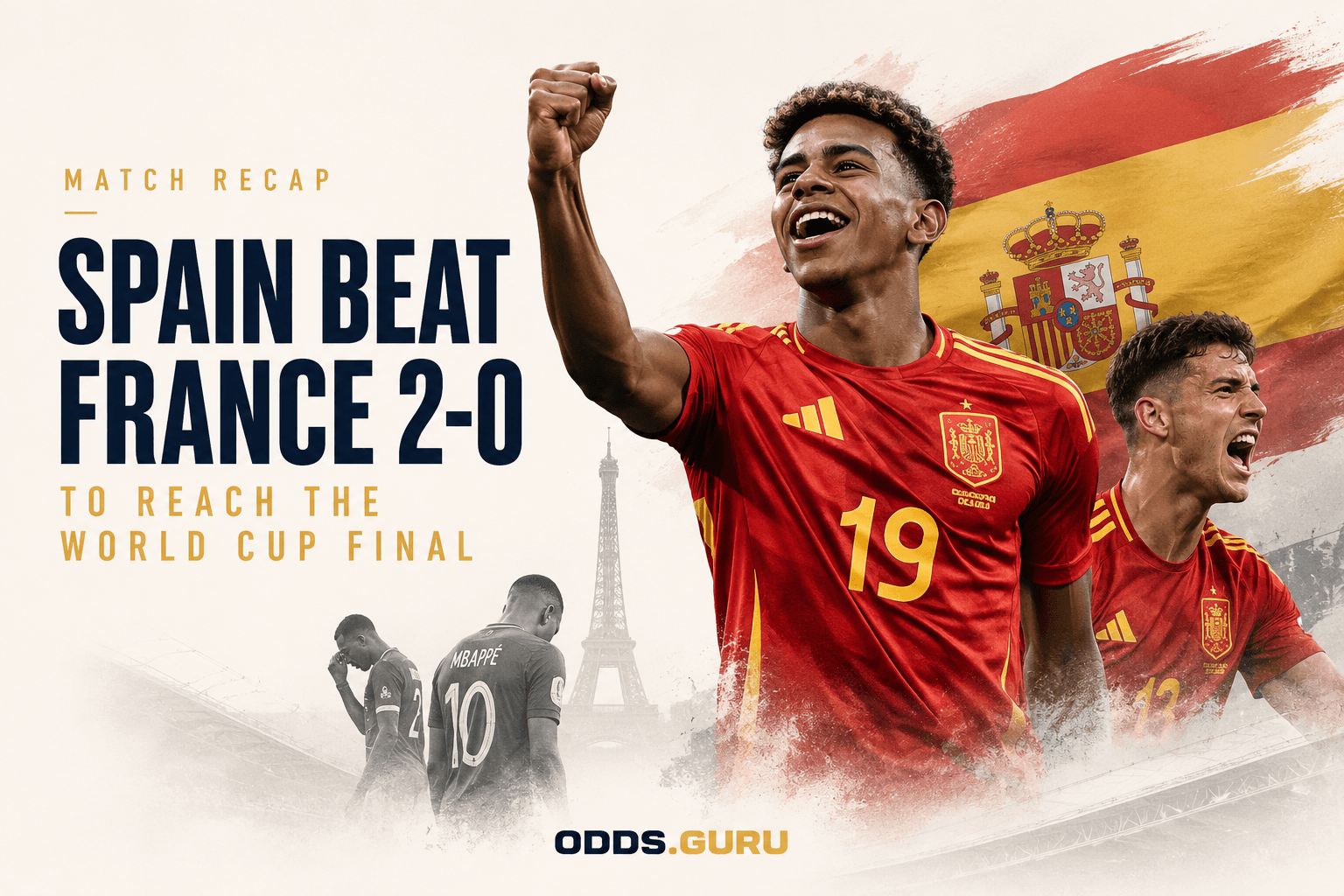
One goal. That is the sum total Spain had conceded across the entire tournament before kickoff, and by full time the number hadn't moved. Spain 2, France 0 — Mikel Oyarzabal converting a penalty on 22 minutes, Pedro Porro adding the second just before the hour — sends La Roja into the World Cup final, and the scoreline undersells how one-directional the semifinal was.
France did not lose this match in a flurry of chances at both ends. They lost it by never establishing a foothold. Spain struck twice, then did what they have done all tournament: kept the ball, kept their shape, and turned the remaining minutes into an exercise in patience.
The reaction from neutrals told its own story. The consensus across fan forums after the whistle was not "close semifinal, fine margins" — it was genuine surprise at how ordinary France looked. Even French supporters conceded the fairness of the result: their attack never arrived, and their coaching staff never found an answer to Spain's control of the game.
That matters for how we read the result. Semifinals between heavyweight nations are usually decided by a moment — a set piece, a deflection, a penalty. This one was decided by a structural gap. Spain were better in possession, better out of it, and better across ninety minutes. Ralf Rangnick saw this coming: after Austria met Spain earlier in the tournament, he said he could not recall his opponents making a single unforced error, and suggested Austria had faced not just the reigning European champions but possibly the next world champions. That assessment now looks less like flattery and more like scouting.
One goal conceded: the stat that reframes Sunday
Spain's defensive record is the single most important number in this tournament, and it deserves unpacking, because it is not really a story about defenders.
- One goal conceded across the entire tournament through the semifinal stage.
- Zero comebacks required — Spain have not had to chase a deficit in the knockout rounds.
- Two-goal cushion delivered again in the semifinal, the game state in which this team is at its most suffocating.
There is a pointed historical echo here, and the fan commentary landed on it immediately. The last time France went two goals down on a stage this big — the 2022 World Cup final against Argentina — they hauled themselves level and dragged the match to penalties. That comeback built France's reputation as the tournament's great escape artists. Spain, holding the same 2-0 advantage in a knockout match against the same opponent, never allowed the escape to begin. The joke doing the rounds — that someone finally knows how to hold a two-goal lead against France — carries a serious point underneath it. Spain's game model closes doors that stayed ajar for Argentina four years ago.
For the final, the implication is stark. Both England and Argentina are teams with genuine attacking talent, but neither has faced an opponent this tournament that rations the ball this severely. Score first against Spain, and a final becomes winnable. Concede first, and the evidence of the last five weeks says the match is functionally over long before the whistle.
Deschamps' 14-year era closes a game short
The defeat also draws a line under the longest and most decorated managerial reign in modern international football. Didier Deschamps, in charge of France since 2012, had already confirmed that this World Cup would be his last tournament — and it ends one match short of a third consecutive final.
The ledger he leaves is remarkable by any standard: the 2018 World Cup title, the 2022 final lost only on penalties, a Nations League crown in 2021, and a Euro 2016 final on home soil. French fans' farewells after this match were notably warm rather than bitter — an acknowledgment that whatever went wrong on the night, the era as a whole was a golden one.
But the manner of the exit will feed the succession debate. France did not fall to a moment of misfortune; they were out-planned and out-executed by a team with a clearer identity. Deschamps built his France on tournament pragmatism — soak pressure, strike in transition, trust the talent. Against a Spain side that concedes neither territory nor transitions, that formula had nothing left to offer. Whoever inherits the job inherits an elite player pool and a fresh tactical question: how does France beat teams that refuse to give the ball back?
England or Argentina: the other half of the World Cup final
Attention now swings to the second semifinal, with the winner earning the right to face Spain in Sunday's World Cup final at MetLife Stadium in New Jersey on July 19.
Neither prospective opponent will relish the assignment. Argentina, the defending champions, know better than anyone what Spain's control looks like from the wrong side of a two-goal deficit — they inflicted a version of that game state on France themselves in 2022, before nearly surrendering it. England, should they come through, would face the tactical problem that has defeated every opponent so far: generating volume of chances against a team that starves you of possession.
The sentiment among supporters watching the first semifinal was close to unanimous — whoever emerges from England vs Argentina starts the final as the team with the harder job. We're inclined to agree, and we'd expect oddsmakers to price Sunday's match accordingly, with Spain installed as clear favourites regardless of the opponent. A team that has conceded once all tournament, just beat France without visible strain, and arrives as reigning European champion is about as strong a finals profile as the market ever sees.
The counter-case exists, and it's worth stating honestly. Finals compress variance into ninety minutes; a set piece, an early red card, or a converted penalty can hand either opponent the lead — and a leading opponent is the one scenario this Spain team has not been stress-tested against in the knockout rounds. Argentina in particular have tournament pedigree and a recent habit of winning the biggest games ugly.
But that is a thin thread to hang a final on. Spain are one win from pairing the Euro 2024 title with a World Cup — a double only the great Spain side of 2008–2012 has managed in the modern era — and on the evidence of this semifinal, they are the most complete team in the tournament by a distance. France, a squad built to trouble anyone, were made to look ordinary. Sunday's finalist has four days to find an idea nobody else has had.
 Reddit