

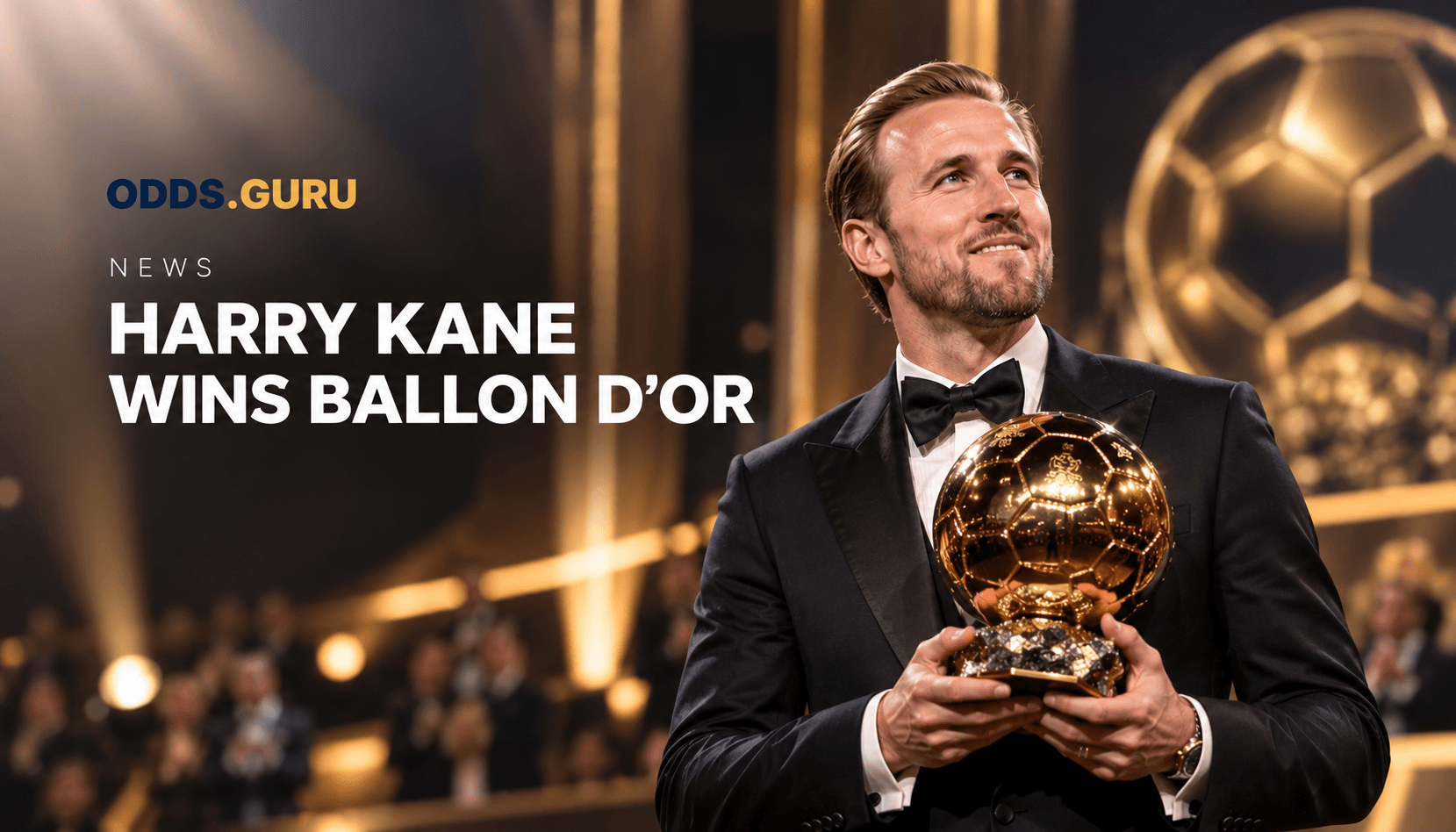
Thomas Müller congratulated Harry Kane on his first Ballon d'Or with a video recorded during a walk in Vancouver, addressing his former Bayern Munich teammate as “Haraldo” and praising the individual quality behind the award. Kane received the trophy at the London Palladium on Monday evening after scoring 73 goals in 65 competitive appearances for Bayern and England.
The England captain finished ahead of Kylian Mbappé and Lamine Yamal. His season brought a German league and cup double with Bayern and third place at the World Cup with England, giving Müller's personal message a substantial sporting foundation.
Thomas Müller sends a personal tribute from Vancouver
A walk through Vancouver was the setting for Müller's congratulations. Now playing for the Vancouver Whitecaps in MLS, the former Bayern player spoke directly to Kane in English and shared the video on Instagram.
The familiar greeting set the tone. Müller called Kane “Haraldo”, congratulated him on his progress and put the emphasis on the striker himself. His message acknowledged that Kane's teams had helped, while making clear that he regarded the award as recognition of Kane's own exceptional football.
That distinction was the substance of the tribute. Bayern had won two domestic trophies and England had finished third at the World Cup, but Müller did not frame the Ballon d'Or as something Kane had simply inherited from successful teams. He credited the player with earning it.
The delivery was personal rather than ceremonial. Müller was speaking as a former teammate, away from the London stage and from Bayern's formal response to the result. The setting gave the message its informality; the praise gave it its weight.
Bayern president Herbert Hainer described the result as a proud day for the club. Müller's response was narrower and more direct, concentrating on the footballer who had received the trophy.
Those responses reflected two parts of the same achievement. Bayern could celebrate a winner representing the club for the first time in decades. Müller could congratulate someone he had played alongside, with the familiarity of a shared dressing room.
His message also avoided reducing the occasion to a list of medals. The central point was that Kane's contribution deserved recognition in its own right, even within teams that had supplied the chances, support and competitive setting for his goals.
73 goals gave Kane a case beyond the biggest team trophies
Kane's 73 goals across 65 matches amounted to more than a goal per appearance for club and country. That total was the clearest numerical foundation for his first Ballon d'Or and also brought him the Gerd Müller Trophy for the season's leading goalscorer.
The two awards recognised related achievements, but they were not identical honours. The goalscoring prize rewarded his finishing output. The Ballon d'Or placed him first in the overall men's player ranking, ahead of a field that included Mbappé and Yamal.
His season combined several forms of success:
- Bayern Munich: German league and cup winners.
- England: Third place at the World Cup.
- Individual scoring: Bundesliga leading scorer for a third consecutive season and Europe's leading club goalscorer in 2025–26.
A domestic double without a European title
Bayern's double gave Kane's goals a clear team outcome. Yet the Champions League belonged to Paris Saint-Germain, who also received the men's club of the year award at the ceremony.
England, meanwhile, finished third at the World Cup. Kane therefore won the Ballon d'Or without either of the two major international team titles available through club and country.
That makes Müller's emphasis on individual excellence particularly relevant. Kane had trophies to accompany his numbers, but his claim did not rest on having won every major competition.
The result shows that those missing titles did not prevent him from finishing first in this year's vote. It does not establish a fixed formula for future winners: a different season brings different performances and different comparisons.
Nor does the final ranking reveal how much weight each voter gave to goals, domestic trophies or international performances. The firm outcome is that Kane's combined season placed him ahead of Mbappé in second and Yamal in third.
Bayern's 45-year wait and England's 25-year gap
For Bayern, Kane's victory ended a wait stretching back to Karl-Heinz Rummenigge in 1981. The 45-year interval made the award a club milestone as well as a personal first.
England's gap was shorter but still substantial. Michael Owen in 2001 had been the country's most recent winner, leaving 25 years between English recipients.
Kane became the fifth English player to win the men's award, joining Stanley Matthews, Bobby Charlton, Kevin Keegan and Owen. That places his victory within a small group spanning several generations of the game.
The location reinforced the English connection. The ceremony took place outside France for the first time, with London hosting the 70th trophy presentation in honour of Matthews, the inaugural winner.
For Kane, a Londoner, collecting the prize in his home city added a personal connection to an already significant result. On stage, he said being in London had made the evening especially meaningful and had felt like a good omen.
The setting did not explain the vote, but it shaped the occasion: an England captain receiving his first Ballon d'Or in London, at a ceremony marking the award's origins with another English winner.
For Müller, the Bayern connection remained central to the congratulations. His former teammate had secured an honour that no player representing the Munich club had won since Rummenigge, giving the tribute significance beyond their personal familiarity.
Kane's acceptance speech shared the credit
Müller placed Kane's individual brilliance first. Kane used his acceptance speech to thank the people around him.
“Without you guys and the rest of the team it wouldn't be possible,” he told his Bayern teammates, crediting the way they pushed him and competed with him.
The two messages were compatible. Müller was explaining why Kane deserved the recognition; Kane was acknowledging the work that had helped him reach it. An individual award could recognise the scorer while still leaving room for the teammates involved in his success.
Kane singled out Dayot Upamecano, referring to their weekly competition in training, and thanked head coach Vincent Kompany. His acknowledgement of Bayern extended beyond the teammates who supplied him during matches to the daily demands of preparing together.
Tottenham and the route to the award
Kane also thanked Tottenham Hotspur, where he had joined as an 11-year-old, and paid tribute to his England teammates and family. His speech connected the award to a career developed across more than his winning season.
He described a route that included loan moves and having to fight for progress, rather than an immediate rise to the top. At 33, his first Ballon d'Or arrived with that longer career behind it.
“I hope my journey, it wasn't straightforward, I didn't go straight to the top, I had to experience a lot of loan moves and fight my way to get to where I am now,” Kane said.
He finished that thought by expressing the hope that his experience could give young footballers inspiration.
 Reddit